
Your Explorer’s turbocharged EcoBoost engine is quick, but the factory cold air intake box is tuned for quiet, not for power. It pulls air through a narrow paper filter and a maze of plastic ducting, which throttles airflow right when the turbos need it most, especially under load, towing, or highway passing.
A cold air intake matters here more than on a naturally aspirated engine. EcoBoost turbos are sensitive to intake temperature and restriction, so a freer-flowing filter and smoother tube can sharpen throttle response, deepen turbo sound, and help the engine breathe the way Ford’s tuners intended once boost comes on.
⏰ Today's Deal
Massive price drop for today only! Tap below to instantly check the current discount and grab yours on Amazon.
Check Price on Amazon As an Amazon Associate I earn from qualifying purchases.The five Cold Air Intakes below are all real, currently listed Amazon products built specifically for Explorer EcoBoost trims, not generic “universal fit” kits. We checked each one against its live Amazon listing and manufacturer specs, and you can read exactly why it made the list, and where it falls short, in each review.
Top 5 Cold Air Intakes For Ford Explorer EcoBoost Reviews
1. K&N 63-2622 63 Series AirCharger — Best Overall

The K&N 63-2622 cold air intake is built for the current-generation Explorer and covers both EcoBoost engines Ford offers: the 2.3L turbo four and the 3.0L twin-turbo V6 in the ST. It uses a roto-molded HDPE tube instead of aluminum, which resists engine-bay heat soak better than thinner metal tubes.
It’s the easiest recommendation on this list because it’s the only kit here that spans both current EcoBoost engines in one part number. Installation is a straightforward swap of the factory airbox and typically takes under an hour with basic hand tools, no tuning or recalibration required.
Key Features
- Roto-Molded HDPE Tube — resists warping and heat soak better than thin aluminum, keeping intake air temps lower on hot days.
- Oversized Oiled Cotton Filter — the conical filter design goes up to 100,000 miles between cleanings under normal highway driving.
- Custom Heat Shield — isolates the filter from engine bay heat so it’s pulling cooler outside air, not reheated underhood air.
- Dyno-Tested Fitment — K&N publishes dyno numbers specific to the Explorer application rather than a generic estimate.
- Million Mile Limited Warranty — K&N backs the 63 Series with its longest available warranty term.
Why We Recommend It
This is the pick for most Explorer EcoBoost owners because it’s a direct-fit, no-tune-required system with a legitimate horsepower and torque increase backed by dyno data, and it covers more EcoBoost trims than any other single kit on this list.
What Customers Say
An Amazon reviewer noted that the coupling piece connecting the intake tube to the throttle body ran a couple of inches short during installation, which they worked around with a cheap hardware-store hose extension. A separate reviewer on the same Amazon listing said they could notice a real difference in both sound and acceleration after installing it.
Pros
- Fits both 2.3L and 3.0L EcoBoost Explorer engines
- Heat-resistant HDPE tube handles engine bay temps well
- No tune or recalibration needed after install
- Filter services are needed only every 100,000 miles
- Backed by K&N’s Million Mile Limited Warranty
Cons
- Not CARB-legal in all states; check compliance for your state before buying
- Some owners note a noticeable increase in turbo intake noise, which not everyone wants
2. K&N 77-2594KC 77 Series Performance Intake — Best Aluminum-Tube Alternative

The 77-2594KC is K&N’s aluminum-tube alternative to the 63-2622, also covering 2020-2024 Explorer EcoBoost models. Where the 63 Series uses molded plastic, this one uses a mandrel-bent aluminum tube with a polished or matte finish, which some owners prefer for how it looks under the hood.
Functionally it’s very close to the 63-2622 in airflow gains, so the decision usually comes down to looks and budget rather than performance. If you show your engine bay off or just prefer metal construction over plastic, this is the better-looking option without giving up much else.
Key Features
- Mandrel-Bent Aluminum Tube — smooth interior bends reduce turbulence better than crimped or welded tubing.
- Chrome-Topped Air Filter — the oiled cotton filter has a polished cap for a cleaner look through the hood.
- Factory Sensor Compatibility — retains the stock mass air flow sensor location, so no recalibration is needed.
- Heat Shield Included — shields the filter from radiant engine heat to keep intake air temperatures down.
Why We Recommend It
Choose this over the 63-2622 if engine bay appearance matters to you or if you simply prefer the durability profile of aluminum tubing over molded plastic. Performance-wise the two are close enough that either is a safe choice for the same generation Explorer.
Pros
- Attractive polished aluminum tube for engine bay looks
- No tuning or recalibration required after install
- Retains factory sensor locations for a clean OEM-style fit
- Washable, reusable filter reduces long-term maintenance cost
- Backed by K&N’s extended limited warranty
Cons
- Premium pricing compared to the plastic-tube 63 Series
- Aluminum transfers more underhood heat than the HDPE alternative
3. AIRAID AIR-402-260 MXP Series — Best for Explorer Sport 3.5L EcoBoost

If you drive a first-generation Explorer Sport with the 3.5L twin-turbo EcoBoost V6, this AIRAID kit is purpose-built for it. It replaces the restrictive factory airbox with a one-piece roto-molded housing and pairs it with AIRAID’s oiled Pro 5R filter for maximum flow.
This is the higher-flow of the two AIRAID filter options for this application, trading slightly more maintenance (periodic re-oiling) for stronger peak airflow. AIRAID’s SYNTHAFLOW-style construction also holds up well in dusty or off-road-adjacent daily driving conditions.
Key Features
- One-Piece Roto-Molded Airbox — replaces the OEM box entirely rather than just swapping the filter, cutting more restriction points.
- Cross-Linked HDPE Intake Tube — engineered with computer modeling to maintain accurate mass air flow readings without recalibration.
- Oiled Pro 5R Cotton Filter — five-layer cotton gauze filtration tuned for maximum airflow on turbocharged applications.
- No Recalibration Needed — AIRAID designs the tube geometry to keep the factory air-to-fuel ratio intact.
- Made in the USA — AIRAID manufactures its intake systems domestically with in-house quality control.
Why We Recommend It
This is the Cold Air intake to buy specifically for the 3.5L EcoBoost Explorer Sport, since it was engineered around that exact turbo layout rather than adapted from a non-turbo application. If you want the strongest airflow gain on this platform and don’t mind re-oiling a filter periodically, this is it.
Pros
- Purpose-built for the 3.5L EcoBoost Explorer Sport, not adapted from another engine
- Full airbox replacement reduces restriction more than a filter-only swap
- No recalibration needed after installation
- Backed by AIRAID’s No Hassle Lifetime Warranty
- Made in the USA with tight manufacturing tolerances
Cons
- Oiled filter requires periodic re-oiling maintenance
- Only covers 2013-2018 Explorer Sport, not the newer 2020+ EcoBoost generation
4. K&N 69-3531TS Typhoon Intake — Best High-Flow Pick for Sport Models

The 69-3531TS is K&N’s Typhoon-series aluminum cold air intake for the 3.5L EcoBoost platform shared across the Explorer Sport, Flex SHO, and Taurus SHO. It’s a mandrel-bent aluminum tube design with a large conical filter, and K&N backs it with published dyno numbers for this specific application.
Where this kit stands out is towing performance. K&N specifically markets this intake around improved throttle response and acceleration when hauling a trailer, which matters if your Explorer Sport regularly pulls a camper or boat and needs more confident uphill pull.
Key Features
- Mandrel-Bent Aluminum Tube — a smooth, unrestricted path from filter to turbo inlet for maximum airflow velocity.
- Guaranteed Dyno-Tested Gains — K&N includes dyno test reports specific to this application with every kit.
- Towing-Focused Design — engineered to improve throttle response and uphill acceleration under trailer load.
- 60-Minute Install — a direct bolt-on replacement that doesn’t void your factory warranty per K&N’s install claims.
Why We Recommend It
If your Explorer Sport, Flex SHO, or Taurus SHO regularly tows, this is the intake built with that use case in mind rather than pure straight-line power. It’s also one of the more widely available kits in this engine family, making replacement filters easy to find down the road.
Pros
- Specifically engineered and marketed for improved towing performance
- Covers three related EcoBoost platforms: Explorer Sport, Flex SHO, Taurus SHO
- Includes published dyno test data for this exact application
- No-Hassle Lifetime Warranty and doesn’t void factory vehicle warranty
- Around 60-minute install with common hand tools
Cons
- Does not cover the current-generation (2020+) Explorer EcoBoost
- Aluminum tube can transfer more underhood heat than molded HDPE designs
5. Spectre Performance SPE-9022 — Best Budget Pick
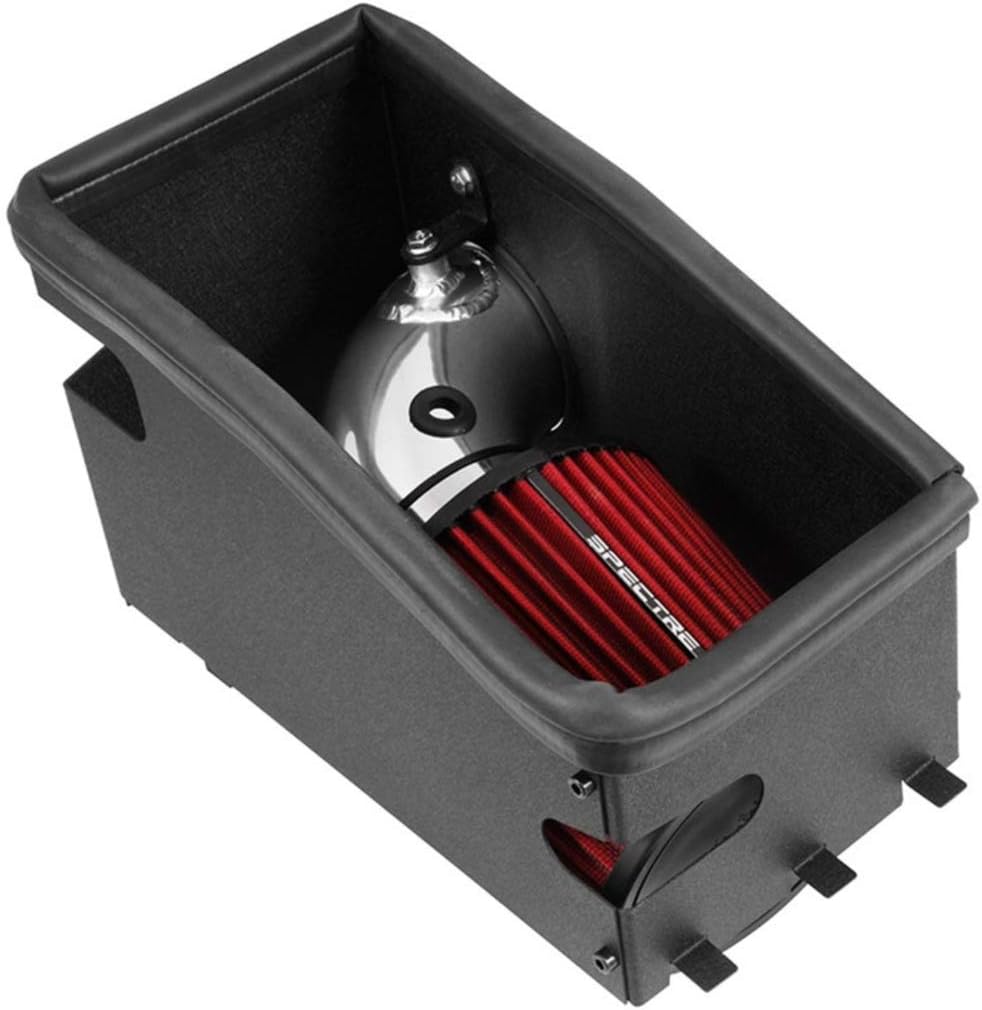
Spectre’s SPE-9022 is consistently the most affordable EcoBoost-compatible cold air intake on this list, and it covers the 2016-2019 Explorer Platinum, 2013-2015 Explorer Sport, and 2014-2019 Flex SHO, all of which run the 3.5L EcoBoost V6. It includes a polished aluminum tube, black powder-coated heat shield, and washable filter.
It’s not going to out-flow the K&N or AIRAID kits above on a dyno sheet, but it includes everything needed for an OE-quality fit, down to the rubber boots and stainless clamps, at a noticeably lower price point. For budget-conscious owners, that’s a fair trade.
Key Features
- Polished Aluminum Intake Tube — a clean, functional finish without the premium price of the higher-end kits.
- Washable Low-Restriction Filter — reusable and cleanable, keeping long-term running costs down.
- Black Powder-Coated Heat Shield — helps isolate intake air from engine bay heat on a budget build.
- Complete OE-Fit Hardware Kit — includes rubber boots, velocity stack, and stainless clamps for a proper factory-style fit.
Why We Recommend It
This is the pick if you want a legitimate power and sound upgrade on your EcoBoost Explorer without spending K&N or AIRAID money. It won’t match their peak airflow numbers, but it’s a real, direct-fit system, not a generic universal kit, at a genuinely lower price.
Pros
- Lowest price point of the direct-fit EcoBoost intakes on this list
- Covers Explorer Platinum, Explorer Sport, and Flex SHO EcoBoost trims
- Complete hardware kit for a proper OE-style installation
- Washable, reusable filter keeps long-term costs low
- Backed by manufacturer warranty support
Cons
- Lower published airflow gains than the K&N and AIRAID options above
- Some buyers report the vent line coupling runs slightly short during install
How to Buy the Best Cold Air Intake For Ford Explorer EcoBoost
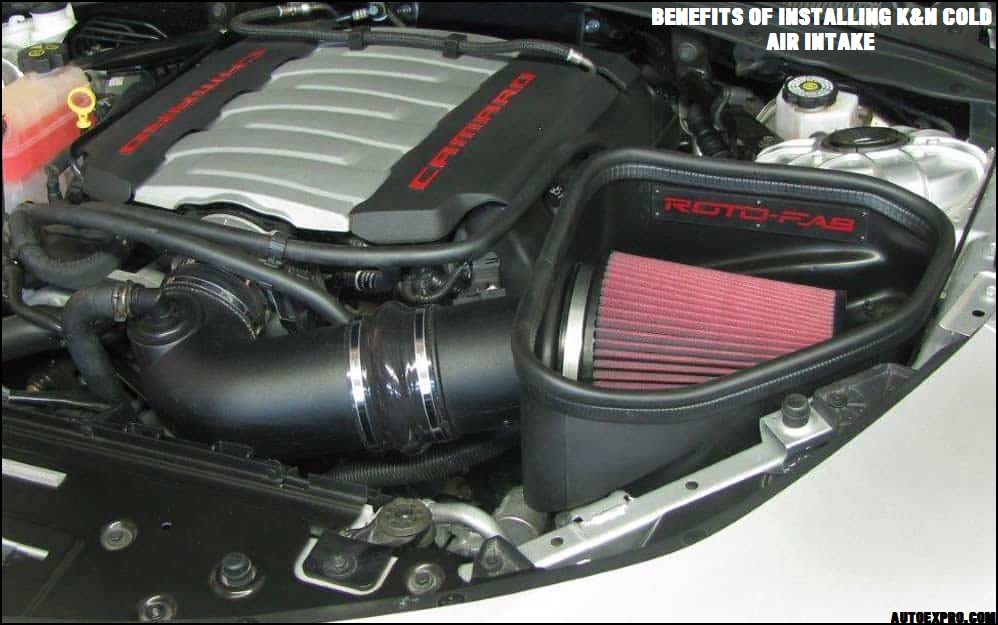
Not every “Explorer intake” fits every Explorer. Ford sold the Explorer with three completely different engine families across two generations, non-turbo 3.5L, EcoBoost 3.5L, EcoBoost 2.3L, and EcoBoost 3.0L, so the single most important buying decision is confirming your exact engine and trim before you check out.
Build Quality
Look at what the tube is made from and how it’s finished. Roto-molded HDPE resists heat soak better than thin aluminum, while mandrel-bent aluminum tubing avoids the airflow-robbing wrinkles you get from cheaper stamped or crimped tubes on off-brand kits.
Performance
Manufacturer-published dyno numbers are only meaningful when they’re tested on your specific engine, not extrapolated from a similar model. According to K&N’s own product testing data, gains vary meaningfully between the 2.3L four-cylinder and 3.0L V6 EcoBoost variants.
Size / Capacity
Bigger conical filters generally mean longer intervals between cleanings and more surface area for airflow at high RPM. If your Explorer sees a lot of dusty back roads or job site duty, prioritize a larger filter over a marginal horsepower claim.
Ease of Use
Every intake on this list is a direct bolt-on with no tuning required, but installation time still varies by kit complexity. If you’re doing this in your driveway rather than a shop, favor kits that reuse factory mounting points and sensor locations.
Warranty & Support
K&N and AIRAID both offer lifetime-style limited warranties on their intake hardware, which matters more than it sounds like on a part that lives under constant heat cycling. Confirm the filter itself is covered separately, since filter media typically carries shorter terms than the tube and housing.
Price vs Value
The gap between the budget Spectre kit and the premium K&N or AIRAID options is real but not enormous. If you already know you’ll want to pair the intake with a performance tuner down the road, it’s worth spending up front on a kit with the strongest dyno-verified airflow numbers.
How to Install, Tune, and Maintain Your Cold Air Intake
How to Install
Every intake on this list is a bolt-on replacement for the factory airbox, but rushing the removal step is where most DIY installs go wrong. Give yourself a clean workspace and don’t force any factory clips, they’re usually reusable.
- Disconnect the negative battery terminal before removing any air intake components
- Note or photograph factory hose and sensor routing before disassembly
- Keep the factory mass air flow sensor clean and handle it by the housing, not the sensor element
- Torque clamps snugly but avoid over-tightening plastic intake tube fittings
- Double-check for loose clamps or hoses before reconnecting the battery and starting the engine
How to Set Up / Tune
None of the intakes on this list require a tune to run correctly, but a proper tune can unlock more of the airflow gain on EcoBoost engines specifically. If you’re chasing maximum output, this is the step that closes the gap between “bolt-on” and “dyno-proven.”
- Confirm your intake doesn’t require a CARB-legal tune in your state before modifying anything else
- Reset the ECU’s adaptive fuel trims by disconnecting the battery briefly after install
- Allow a short relearn period of normal driving before judging throttle response changes
- If pairing with a tuner, install the intake first, then load the tune afterward
How to Maintain
Cold air intakes need far less maintenance than the factory paper filter setup, but “less” isn’t “none.” Oiled filters in particular need attention on a schedule, not just when they look visibly dirty.
- Clean oiled cotton filters every 30,000-50,000 miles, sooner in dusty conditions
- Use only the filter manufacturer’s cleaning kit and recharge oil, mismatched oil weight reduces filtration
- Inspect the heat shield seal periodically to confirm it’s still sitting flush against the hood
- Check clamps for looseness during routine oil changes since heat cycling can work them loose over time
Frequently Asked Questions
Will a cold air intake void my Ford Explorer’s warranty?
Under the Magnuson-Moss Warranty Act, Ford can’t void your entire warranty just because you installed an aftermarket intake. However, if the intake causes a specific failure, like a hydro-locked turbo from water ingestion, that specific repair could be denied.
How much horsepower does a cold air intake add to an EcoBoost Explorer?
Gains vary by engine and kit, typically in the 10-20 horsepower range based on manufacturer dyno testing, though real-world seat-of-the-pants differences are often more noticeable in throttle response and sound than in raw numbers. For a deeper breakdown, see our guide on how much horsepower a K&N intake actually adds.
Does a cold air intake hurt gas mileage on an EcoBoost engine?
Not typically, and some owners report a very slight improvement from reduced intake restriction, though it’s rarely dramatic either direction. If you’re curious how filter choice factors in generally, we cover that in our article on whether air filters affect gas mileage.
Do I need a tune after installing a cold air intake on my EcoBoost Explorer?
No, every intake reviewed here is designed to work with the factory ECU calibration without a tune. A tune is optional if you want to extract more of the intake’s potential, not required for safe operation.
What’s the difference between an oiled and dry cold air intake filter?
Oiled cotton filters generally flow slightly better and are reusable indefinitely with periodic cleaning and re-oiling, while dry synthetic filters need less maintenance but may need full replacement sooner. Neither is “better” universally; it depends on how much upkeep you’re willing to do.
Final Thoughts
The right cold air intake for your Explorer EcoBoost comes down to which exact engine you have, since the 2.3L, the 3.0L, and the older 3.5L twin-turbo aren’t interchangeable when it comes to fitment. Get that detail right first, before comparing brands or price.
For most owners of the current-generation Explorer, the K&N 63-2622 is the safest all-around pick because it covers both EcoBoost engines with strong, dyno-verified gains. Explorer Sport owners chasing maximum airflow should lean toward the AIRAID AIR-402-260, while budget-focused buyers get real value from the Spectre SPE-9022.
Whichever you choose, double-check your exact model year, trim, and engine against the listing before ordering, and consider pairing it with related upgrades like a broader set of aftermarket performance accessories if you’re planning more than one modification. A cold air intake is one of the easiest, most reversible ways to make your EcoBoost Explorer feel sharper on every drive.

Leave a Reply