
Most people shopping for a turbo kit hit the same wall. Hundreds of listings exist online, prices swing from $300 to $3,000, and much of the marketing sounds the same. Nobody explains which kits survive 20,000 daily-driven miles versus which ones are built only for the track. That gap leaves buyers second-guessing their cart before checkout.
Forced induction is the biggest power upgrade you can make without opening up an engine. A well-matched kit can add 50 to 150 horsepower to a stock motor while maintaining reasonable fuel economy during light-throttle commuting. That mix of everyday drivability and weekend fun is why turbo kits remain one of the most-searched upgrades in the tuning world.
⏰ Today's Deal
Massive price drop for today only! Tap below to instantly check the current discount and grab yours on Amazon.
Check Price on Amazon As an Amazon Associate I earn from qualifying purchases.The five kits below earned their spot by balancing response, reliability, and price for real street use. We compared spool characteristics, build quality, and long-term owner reports, focusing on how each kit behaves off wide-open throttle, since that’s where a daily driver actually lives. Whether you want a bolt-on kit or a standalone turbo, one of these fits your build and your budget.
Top 5 Turbo Kits for Daily Drivers: Full Reviews
1. Garrett GTX2860R Gen II — Best Overall
The Garrett GTX2860R Gen II is a ball-bearing turbo built for four-cylinder platforms that need quick spool without giving up top-end pull. It’s aimed at drivers who want a turbo that feels responsive in daily traffic but can still support a real power goal once you add supporting mods. Garrett updated the compressor wheel aerodynamics on this Gen II version, which owners say noticeably widens the usable powerband compared to the original GTX2860R.
Buyers should know this is a standalone turbocharger, not a full kit, so you’ll need to source your own manifold, downpipe, and piping, or buy a platform-specific install kit. It’s a premium price point, but the payoff is a turbo that’s genuinely known for spooling fast enough to feel natural in stop-and-go driving.
Key Features
- 8mm Dual Ceramic Ball Bearing Cartridge: This bearing setup cuts down shaft play and friction at low turbo speeds, which is the main reason this turbo spools noticeably quicker than older journal-bearing units. In daily driving, that translates to boost showing up earlier off idle instead of a flat dead zone before the power hits.
- Gen II Compressor Wheel Aerodynamics: Garrett re-engineered the wheel using CFD analysis to push more air mass flow without needing a bigger frame. Practically, this means you can run more boost on the same physical turbo size instead of jumping up a whole frame class just to hit your power target.
- Fully Machined Ported Shroud: The ported shroud design resists compressor surge, which is the chirping or fluttering noise you get when you lift off the throttle under boost. For a daily driver, that means less strain on the compressor wheel every time you coast up to a red light.
- Fully Machined Speed Sensor Port: This lets you add a speed sensor for data logging without drilling or modifying the housing yourself. It’s a small feature, but it matters if you plan to datalog your tune for reliability monitoring over time.
Why We Recommend It
The GTX2860R Gen II earns the top spot because it hits the sweet spot daily drivers actually need: quick spool, a wide efficient range, and proven reliability from a brand that OEMs trust. It suits drivers running a tuned four-cylinder who want boost by 3,000 RPM without sacrificing the ability to push past 400 horsepower later if the build grows.
What Customers Say
A Fiesta ST forum member who swapped to this turbo said daily driving on light boost actually improved highway fuel economy compared to a worked stock turbo, since the GTX2860R doesn’t have to work as hard to hit the same boost target. On the Miata Turbo Forum, owners comparing similarly sized 2860-class turbos noted that some competing units produce a noticeable whine at cruising speed, while Garrett’s design was praised for being quieter during normal commuting.
2. Precision Turbo PT6266 Gen2 CEA — Best for High-Power Builds
The Precision Turbo PT6266 Gen2 CEA is built for drivers who plan to push well past stock power levels while keeping the car street legal and drivable. This is a mid-frame turbo rated up to 800 horsepower, making it the pick for someone who wants serious headroom now instead of buying a small turbo and outgrowing it in a year.
It uses Precision’s Competition Engineered Aerodynamics on both the compressor and turbine sides, a technology that trickled down from their race turbos. Buyers should know this is a big step up in both size and price from an entry-level street turbo, so it’s best suited for builds with supporting fuel and engine upgrades already planned.
Key Features
- Gen2 CEA Compressor Wheel: Machined from a forged 2618 aluminum billet, this wheel is engineered for higher efficiency at a given boost pressure. That efficiency means less heat soak in the intake charge, which keeps power more consistent during longer daily commutes in hot weather.
- Dual Ceramic Ball Bearing Center Section: This is an air-cooled cartridge, which simplifies installation since you don’t need to plumb coolant lines. It still delivers strong thrust load capacity, so the turbo holds up under repeated hard pulls without premature bearing wear.
- 66mm CEA Turbine Wheel: The larger turbine wheel is designed to flow more exhaust gas efficiently, supporting the turbo’s 800-horsepower ceiling. For a daily driver being built up over time, this headroom means you won’t need to swap turbos again as your power goals increase.
- Multiple Housing Configurations: Precision offers several turbine housing A/R options, from tight street-spool ratios to larger race-oriented housings. This lets you dial in the exact spool-versus-top-end tradeoff for your specific engine and driving style instead of settling for a one-size-fits-all housing.
Why We Recommend It
This turbo is for builders who know they’ll eventually chase four-digit horsepower or simply want a huge safety margin above their current tune. It stands out because Precision built genuine race technology into a package that’s still manageable on a street car with the right supporting mods, and it rewards owners who plan their build in stages
What Customers Say
On JEGS’ product listing, buyers researching the PT6266 point out that a single unit can support close to 800 horsepower on most engines while keeping reasonable throttle response for its size class. A Real Street Performance customer service note echoed a common theme from shoppers: most four-cylinder builds pair this turbo with a T3 housing, while six- and eight-cylinder daily builds lean toward the larger T4 housing for better exhaust flow.
3. BorgWarner EFR 6758 — Best for Fast Spool and Street Response
The BorgWarner EFR 6758 targets drivers who care most about throttle response. It’s the smallest turbo in BorgWarner’s EFR lineup, purpose-built to spool early while still supporting up to 500 horsepower in a single-turbo setup. This makes it a favorite for small-displacement four-cylinder daily drivers that need snappy low-end torque more than outright top-end power.
Owners should know this turbo is best paired with a proper tune and, ideally, water cooling, even though BorgWarner lists it as optional. Buyers coming from a laggy stock turbo often describe the transition to this EFR as night and day in everyday driving.
Key Features
- 58mm Gamma-Ti Turbine Wheel: This titanium-aluminide wheel is significantly lighter than a standard steel turbine wheel, which means less rotational inertia to overcome before boost builds. That’s the core reason this turbo is known for spooling so early compared to similarly sized competitors.
- Integrated Boost Control Solenoid: The compressor housing has a boost control solenoid built directly into it, cutting down on extra plumbing and mounting brackets during install. For a daily driver, this makes for a cleaner engine bay and one less external component that can leak or fail.
- Built-In Blow-Off Valve: Every EFR compressor housing includes an integrated BOV, so you’re not sourcing and mounting a separate valve. This keeps compressor surge under control every time you lift off the gas in traffic, protecting the turbo over years of stop-and-go commuting.
- Dual-Row Ceramic Ball Bearings: This bearing design cuts friction significantly versus a standard ball bearing setup, contributing directly to the fast spool this turbo is known for. It also includes a built-in oil restrictor, which helps manage oil flow and reduces the chance of seal weeping over time.
Why We Recommend It
Drivers who want their turbo car to feel alive at normal street RPM, not just at redline, should look at the EFR 6758. It stands out in this lineup because BorgWarner engineered nearly every efficiency trick from their racing turbos into a compact frame that spools fast enough to make boost feel available almost everywhere you drive.
What Customers Say
A ScoobyNet forum member running the EFR 6758 on a Subaru STI daily driver reported that torque availability improved across the entire rev range compared to the stock turbo, calling it a genuine upgrade for everyday drivability rather than just peak numbers. On SpoolStreet forums, enthusiasts comparing the 6758 against BorgWarner’s larger EFR options generally agreed it remains the fastest-spooling turbo in the family, even against newer mixed-flow turbine designs.
4. Rev9 T3/T4 Complete Turbo Kit — Best Complete Bolt-On Kit
The Rev9 T3/T4 turbo kit is aimed at Honda B- and D-series owners who want everything needed to add boost in one box, without hunting down a manifold, wastegate, and piping separately. It’s a popular entry point for first-time turbo builders because it bundles the turbocharger with the hardware needed to get boost running on a budget.
Buyers should know this kit uses a 0.63 A/R T3 flange turbine housing rated for 200 to 400-plus horsepower, and it ships with two wastegate springs so you can set your boost level. It’s a true bolt-on style kit, but supporting mods like injectors, a fuel management piggyback, and a proper tune are still required for safe daily use.
Key Features
- T3T4 Hybrid Turbocharger: This turbo mixes a T3 exhaust housing with a larger T04-style compressor wheel, a proven combination for four-cylinder Honda engines chasing 200 to 400 horsepower. It’s a well-understood setup with decades of community tuning knowledge behind it.
- Complete Piping and Manifold Kit: The kit includes the manifold, downpipe, intercooler piping, and oil lines needed for install, cutting down on the sourcing headache that trips up first-time builders. This is the main reason it’s positioned as a true kit instead of just a standalone turbo.
- 38mm Wastegate with Dual Springs: The included wastegate comes preset at 5 PSI with a second 10 PSI spring in the box, letting you choose your boost level within a 15 PSI ceiling. For a daily driver, running toward the lower end of that range keeps the engine safer on stock internals.
- Oil-Cooled Center Section: Skipping water cooling simplifies installation since you don’t need to tap into the coolant system. It keeps the install more approachable for a home garage build, though it means heat management depends more on driving style and oil quality.
Why We Recommend It
This kit fits budget-focused Honda owners who want a genuine bolt-on path into forced induction without piecing together parts from five different vendors. It stands out for including nearly everything needed in one purchase, which is exactly why it remains one of the most searched turbo kits among first-time Honda builders.
What Customers Say
On the 8th Generation Honda Civic Forum, a member researching this kit noted it was originally listed for the Acura RSX platform but needed intercooler piping modifications to fit later Civic engine bays properly. A D-Series Forum owner running a similar complete turbo kit as a daily driver for over 10,000 miles said the setup held up well on a commute of more than 50 miles round trip, describing the low-boost power gain as a noticeable, fun upgrade over the stock naturally aspirated motor.
5. maXpeedingrods Universal Turbo Kit — Best Budget Option
The maXpeedingrods universal turbo kit is the pick for buyers who want to test forced induction on the cheapest possible budget, or who need an inexpensive direct-replacement turbo in a pinch. The brand sells both OEM-style replacement turbos and universal performance units like the GT35 and GT45 series, covering a wide range of engine sizes from 4.0L up to 6.0L.
Buyers should go in with realistic expectations. This is a budget manufacturer, and build consistency has been a recurring theme in owner feedback. It can work well as a stopgap or low-buck build turbo, but it’s not the choice for someone wanting the same long-term reliability as an established performance brand.
Key Features
- Ductile Iron Turbine Housing: Rated for temperatures up to 700°C, this housing material is a reasonable choice for street-level exhaust temperatures on a daily driver. It’s a step down from the stainless steel housings used on premium turbos, but adequate for moderate boost applications.
- T4 Twin-Scroll Exhaust Inlet: This flange style is compatible with a wide range of aftermarket manifolds, making it easier to match the turbo to whatever exhaust manifold your budget build already uses. It’s a practical feature for anyone piecing together a turbo kit from mixed sources.
- Factory Balance Testing: maXpeedingrods states every unit is balance tested using Turbotechnics equipment before shipping, aiming to catch major imbalance issues before the turbo reaches your garage. This is a baseline quality check, though it doesn’t guarantee the same tolerances as a hand-built premium turbo.
- Wide Engine Compatibility Range: The GT45 series is rated to support over 600 horsepower on paper, covering everything from smaller four-cylinders to larger V8 daily drivers. This flexibility is a big reason budget builders gravitate toward this brand for a first turbo project.
Why We Recommend It
This kit fits buyers who are experimenting with their first turbo build, need an emergency direct replacement, or simply can’t justify a premium turbo’s price tag right now. It earns its spot for accessibility alone, letting far more people get into forced induction, as long as they understand the tradeoffs against a name-brand turbo.
What Customers Say
On a Mazdaspeed owner forum, one member starting a discussion thread said they turned to a maXpeedingrods turbo out of necessity when no other options were available locally for their daily driver, adding that the brand has a genuinely mixed reputation despite some surprisingly positive reviews.
In that same community, another owner described pulling a turbo believed to be from this brand after roughly 7,000 miles and finding it had failed in nearly every way short of total breakdown, which is a useful data point for anyone planning long-term daily use.
How to Buy the Best Turbo Kit for a Daily Driver
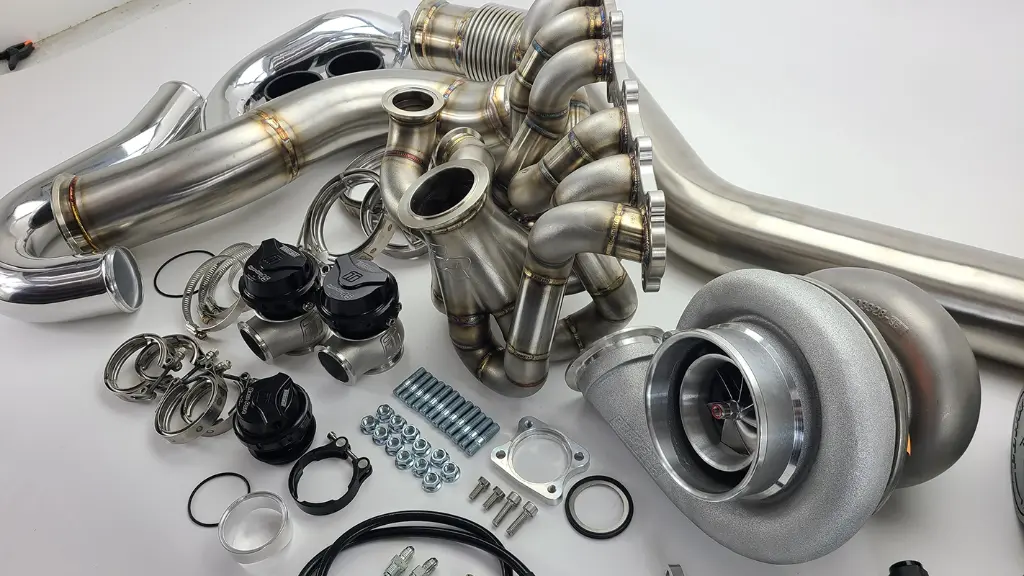
Picking the right turbo kit comes down to more than horsepower numbers on a box. Match the kit to your actual engine, your budget for supporting mods, and how much power you truly need for how you drive every day. These factors below will help you avoid buying more turbo, or less reliability, than you actually need.
Build Quality
Build quality determines how long your turbo survives daily heat cycles and vibration. Look at bearing type, housing material, and whether the manufacturer publishes real balance testing data. A turbo with looser tolerances might run fine for a few thousand miles, then develop oil seepage or shaft play right when you’re depending on the car most.
Performance
Performance isn’t just peak horsepower, it’s how the power arrives. A turbo that spools at 2,000 RPM feels completely different in traffic than one that doesn’t come alive until 4,500 RPM. Match the compressor and turbine sizing to your engine displacement and realistic power goal, not just the biggest number on the spec sheet.
Size & Capacity
Bigger isn’t automatically better for a daily driver. An oversized turbo spools late, feels laggy at normal street speeds, and often makes the car less enjoyable to drive despite a higher horsepower ceiling. Pick a frame size that matches your actual power target with some headroom, not the largest turbo your budget allows.
Ease of Use
Ease of use covers how straightforward the install and daily operation really are. Complete kits with included manifolds and piping save serious time versus sourcing every part separately. Also consider whether the turbo needs water cooling, since that adds coolant line plumbing that a purely oil-cooled unit skips entirely.
Warranty & Support
Warranty coverage tells you how much a manufacturer trusts their own product. Premium brands like Garrett, Precision, and BorgWarner typically back their turbos with limited warranties and strong technical support networks. Budget brands often offer shorter or narrower coverage, so factor potential replacement costs into your total budget upfront.
Price vs Value
The cheapest kit isn’t always the best value once you count fuel system upgrades, tuning costs, and potential early replacement. A slightly pricier turbo from an established brand often costs less over three years than a budget unit that needs replacing twice. Think about total cost of ownership, not just the checkout price.
How to Install and Maintain a Turbo Kit
Getting a turbo kit running safely on a daily driver takes more than bolting parts together. Following the right process during install and upkeep protects both your engine and your investment in the kit itself.
First-time setup: Before installing anything, confirm your kit’s flange type matches your manifold and that your fuel system can support the extra airflow. Skipping this check is the most common reason first-time builders end up with mismatched parts and wasted money on return shipping.
Installation: Work through oil feed and drain lines carefully, since a poorly routed drain line is one of the top causes of turbo seal failure. Always prime the oil system by cranking the engine with the fuel pump disabled before the first startup, so the bearings aren’t spinning dry.
Proper usage: Let the engine idle for 30 to 60 seconds before driving off, and avoid heavy throttle until oil has fully circulated, especially in cold weather. On shutdown after hard driving, idle for a minute so the turbo isn’t starved of oil while the bearings are still spinning fast.
Maintenance: Stick to shorter oil change intervals than stock, since turbocharged oil sees more heat cycling. Regularly inspect boost hoses and clamps for cracking, and keep an eye on boost gauge readings for any unexplained drop, which often signals a developing leak.
Common beginner mistakes: The biggest mistakes are skipping a proper tune after installing the turbo, ignoring fuel system upgrades needed to support the extra air, and running max boost immediately instead of breaking the setup in gradually. Patience during the first few hundred miles pays off in long-term reliability.
Frequently Asked Questions
Will a turbo kit hurt my daily driver’s fuel economy?
Not necessarily. At low, steady-throttle cruising, a turbocharged engine isn’t making boost, so fuel consumption can stay similar to or even better than a comparable naturally aspirated setup. Fuel economy only drops noticeably when you’re regularly driving under boost, which is a driving habit more than an inherent turbo problem.
Do I need to upgrade my fuel system with a turbo kit?
In most cases, yes. Stock injectors and fuel pumps are sized for naturally aspirated power levels, and pushing significant boost without upgrading them risks running lean, which can damage pistons. Budget for injector and fuel pump upgrades alongside your turbo kit purchase.
How much horsepower can I expect from a bolt-on turbo kit?
It depends heavily on the turbo size and supporting mods, but most complete street kits in this roundup are rated for 200 to 500-plus horsepower. Realistically, a safe daily-driven tune on stock internals usually lands well under that ceiling to protect long-term reliability.
Is a bigger turbo always better for a daily driver?
No. A larger turbo often means noticeably later spool, which feels sluggish in everyday traffic even though it supports higher peak power. For daily use, a properly sized turbo that spools early usually delivers a more enjoyable driving experience than an oversized unit chasing bigger dyno numbers.
Can I install a turbo kit myself, or do I need a professional?
Mechanically inclined DIYers can install most bolt-on kits with common hand tools and a weekend of work. That said, the tuning step afterward is not something to skip or guess at, and it’s worth having a qualified tuner dial in the fuel and ignition maps before daily driving on boost.
Final Conclusion
Choosing the best turbo kit for a daily driver really comes down to matching the turbo to how you actually drive, not just chasing the biggest horsepower number available. The Garrett GTX2860R Gen II takes the Best Overall spot because it balances fast spool, a wide powerband, and long-term reliability better than anything else in this roundup.
If budget is the priority, the maXpeedingrods universal kit gets you into forced induction for the lowest possible cost, as long as you accept the tradeoffs in consistency. For builders chasing serious power down the road, the Precision Turbo PT6266 Gen2 CEA is the clear premium pick, offering headroom most daily drivers will never fully use.
For Honda owners wanting a true bolt-on path, the Rev9 T3/T4 kit remains a practical starting point, while the BorgWarner EFR 6758 is the one to pick if throttle response matters more to you than anything else. Whichever kit you choose, budget for a proper tune and supporting fuel mods, and your daily driver will reward you with real, dependable power for years to come.
Sources:
- Garrett Motion — GTX2860R GEN II Turbocharger product page: https://www.garrettmotion.com/racing-and-performance/performance-catalog/turbo/gtx2860r-gen-ii/
- Full-Race — BorgWarner EFR 6758 Turbo product page: https://www.full-race.com/borgwarner-efr-6758-turbo
- JEGS — Precision Turbo Gen 2 PT6266 CEA product listing: https://www.jegs.com/p/Precision-Turbo/Precision-Turbo-Gen-2-PT6266-CEA-Street-and-Race-Turbocharger/3048685/10002/-1
- Rev9Power — Honda B16/B18 T3T4 Turbo Kit product page: https://rev9power.com/honda-civic-b16-b18-t3t4-turbo-kit-civic-crx-integra-del-sol.html
- Mazdaspeeds.org Forum — Maxpeedingrods Turbos owner discussion thread: https://www.mazdaspeeds.org/threads/maxpeedingrods-turbos.17878/

Leave a Reply