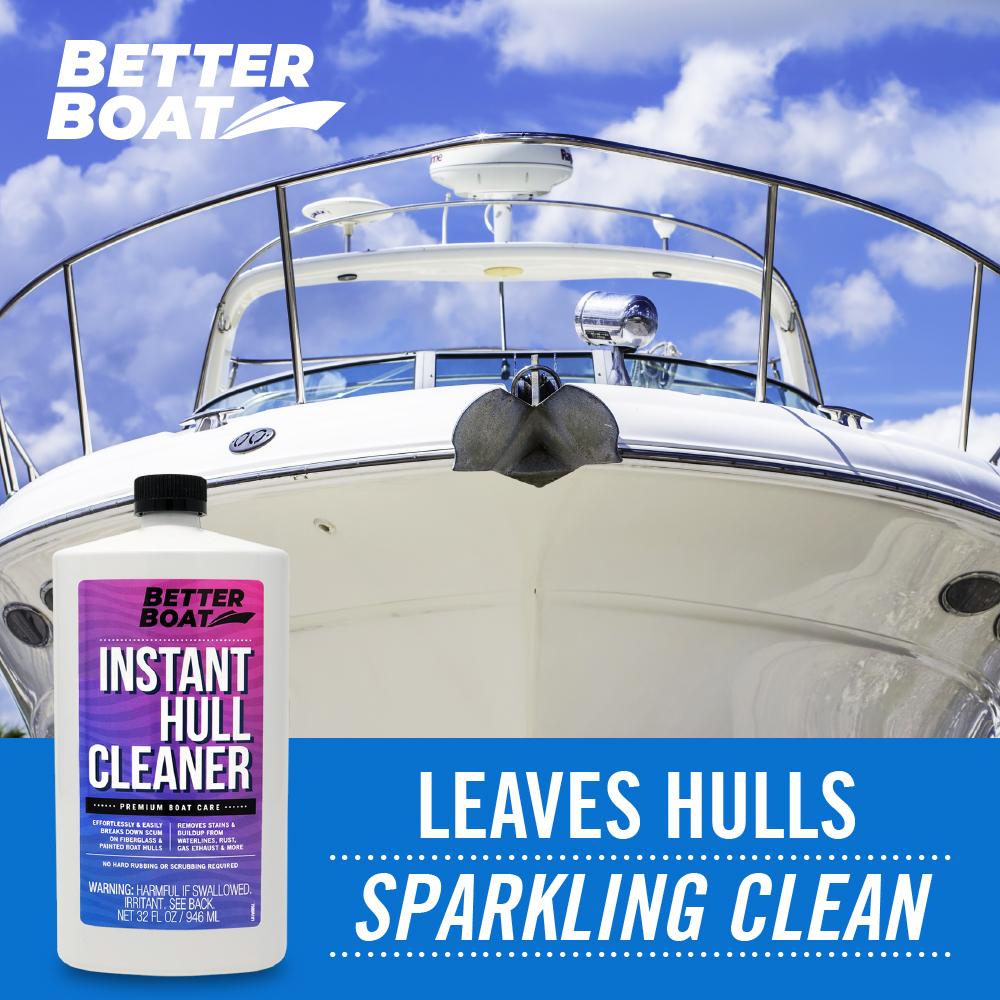
Waterline scum and yellow stains make a clean boat look neglected. Soap lifts surface dirt, but it will not erase rust, tannin, or the ring that forms at the waterline. The best cleaners for boat hulls dissolve those stains on contact, so you spend less time scrubbing and more time on the water.
Many strong hull cleaners rely on acid, and that is where buyers go wrong. Some suit fiberglass and painted hulls, while others are meant for streaks or light spots only. Wax, decals, bottom paint, and trailer parts can suffer if you pick the wrong formula or let it sit too long.
We compared five hull cleaners sold on Amazon using manufacturer specs, retailer pages, and real buyer comments. Each pick lists what it fits and where it falls short. Heading to the ramp? Our fishing pole case guide keeps your rods safe on the drive there.
As an Amazon Associate, we earn from qualifying purchases. This costs you nothing extra.
Star brite Instant Hull Cleaner Gel (32 oz)
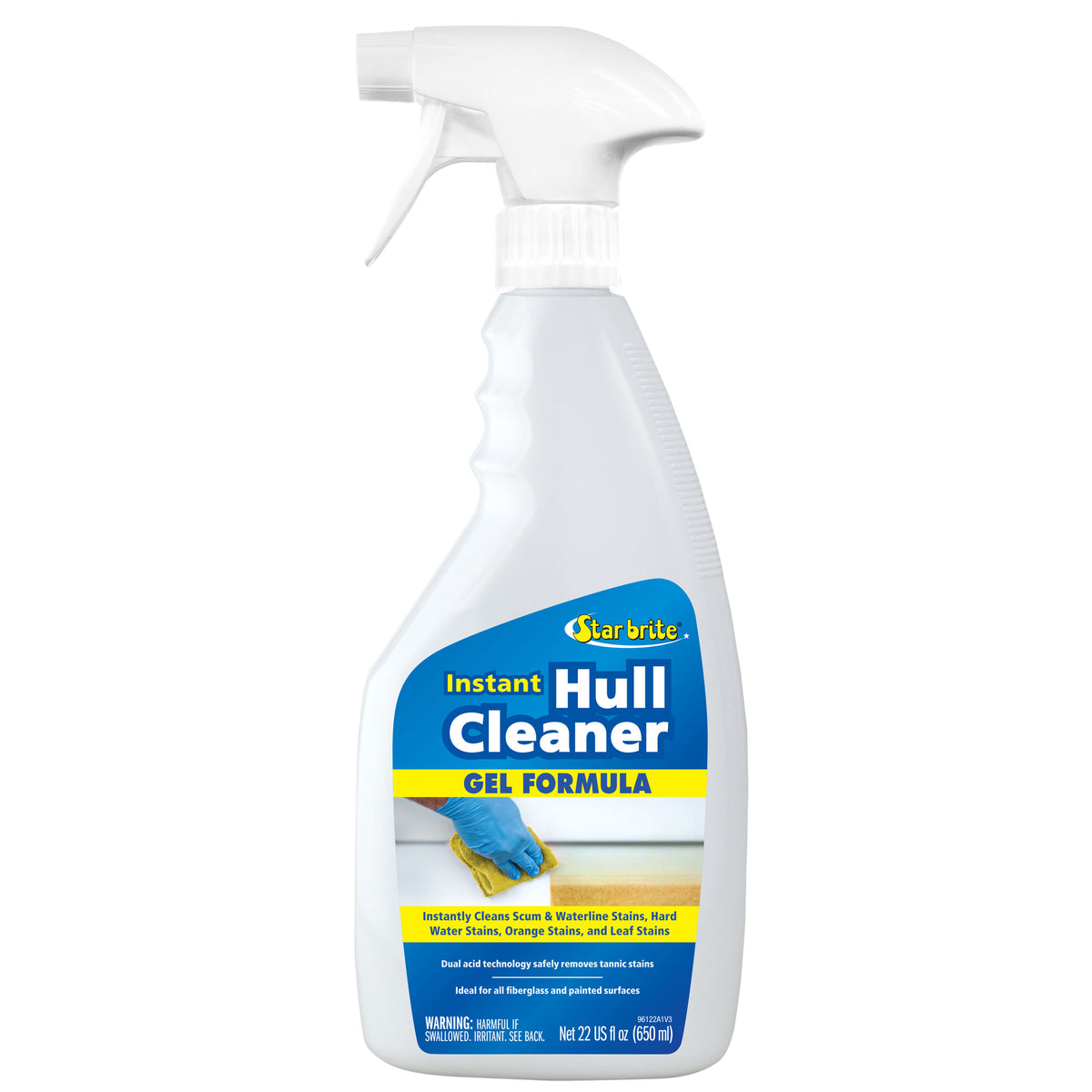
Star brite’s oxalic acid gel clings to vertical hull sides, so it stays put instead of running off. It handles rust, leaf, and scum-line stains on fiberglass and painted hulls with a simple apply, wait, and rinse routine. Plan to re-wax afterward.
- Oxalic acid gel formula
- Clings to vertical sides
- Fiberglass and painted surfaces
- About two minutes, then rinse
Top 5 Boat Hull Cleaners: Reviews
1. Star brite Instant Hull Cleaner Gel — Best for Fiberglass and Painted Hulls
Star brite’s gel hull cleaner is a 32-ounce spray that targets rust, dried fish blood, leaf stains, and scum lines. The oxalic acid formula clings to vertical sides, so it works without hard scrubbing. It suits fiberglass and painted hulls. Stubborn stains may need a second pass. Plan to use it above 50°F, rinse well, and wax the hull afterward.
Oxalic acid
Fiberglass and painted
2-minute dwell
Key Features
- Oxalic acid formula — Star brite calls it easier to use than hydrochloric or phosphoric acid blends.
- Gel that clings — Sticks where sprayed, which helps on vertical sides and stops runny drips.
- Broad stain list — Targets rust, blood, grass, leaf stains, and yellowing scum lines on hull surfaces.
- Quick dwell time — Leave it on about two minutes, then rinse thoroughly with fresh water.
- Polish follow-up — Star brite suggests applying a marine polish or wax to restore shine afterward.
✔ Pros
- Clings to vertical sides
- Fast two-minute dwell
- Hits rust and scum lines
✖ Cons
- Needs gloves and thorough rinse
- Not rated for bare aluminum
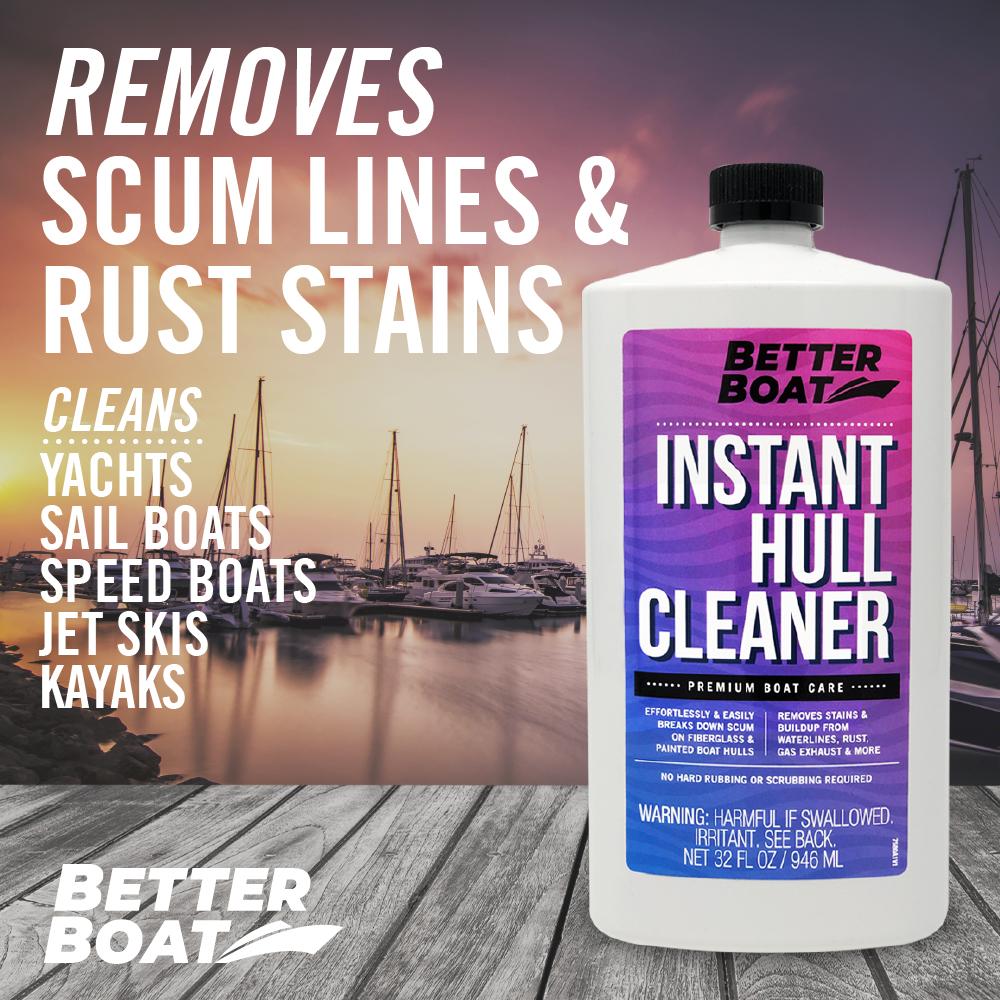
2. Better Boat Instant Boat Hull Cleaner — Best for Rust and Exhaust Marks
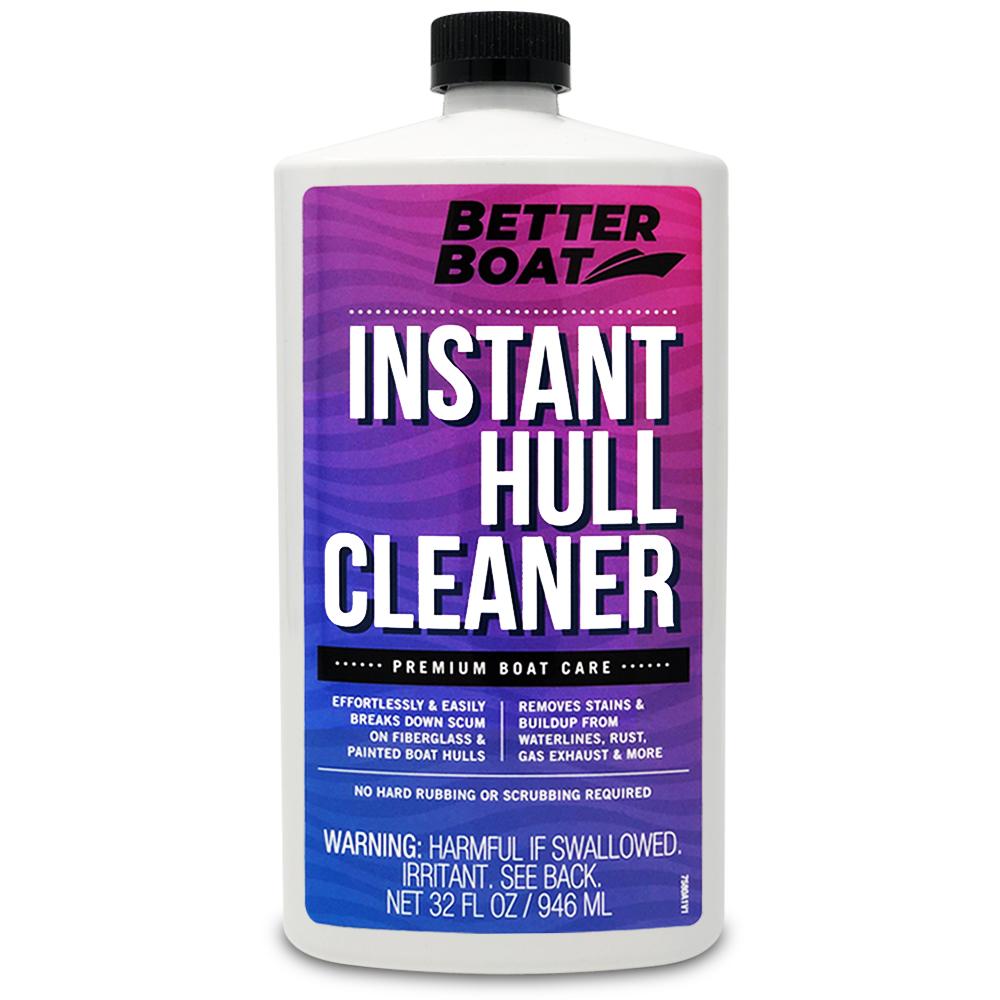
Better Boat’s hull cleaner removes waterline, rust, exhaust, algae, and scum stains from fiberglass and painted hulls. You apply it, wait about two minutes, and rinse. It is a heavy-duty cleaner that will likely strip wax, so reapply protection afterward. Keep it off your trailer, and see our stabilizer bar for trucks guide if towing feels loose.
2-minute dwell
Rust and exhaust stains
Strips wax
Key Features
- Wide stain range — Targets waterline, rust, exhaust, algae, and scum stains without relying on hard scrubbing.
- Simple routine — Apply, let it sit for about two minutes, then rinse with fresh water.
- Painted hull safe — Brand says it is generally safe on painted surfaces; test a small area first.
- Cold-weather limit — Works best when the temperature is above 50°F, per the directions.
- Not for aluminum — Better Boat says bare aluminum needs a cleaner made for aluminum.
✔ Pros
- Wide stain range
- Simple apply-and-rinse
- Fiberglass and painted hulls
✖ Cons
- Likely strips existing wax
- Keep off trailers and decals
- Not for bare aluminum
3. Davis FSR Fiberglass Stain Remover — Best Brush-On Stain Gel
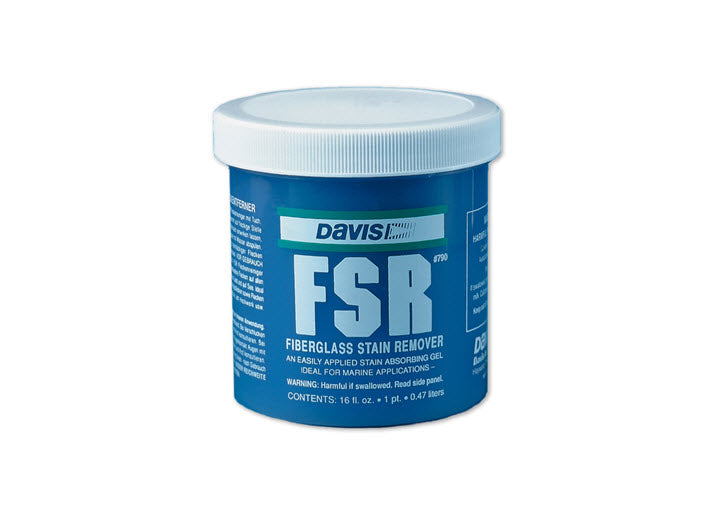
Davis FSR is a stain-absorbing gel in a 16-ounce container, built for oil, rust, exhaust, waterline, and transom stains on fiberglass. It also removes road soil from trailered boats. You brush or wipe it on, wait a few minutes, and rinse. It contains oxalic acid and isopropanol. Davis says it is safe on gelcoat and white painted surfaces, but test a small spot first.
Oxalic acid
Gelcoat and white paint
Brush-on
Key Features
- Stain-absorbing gel — Davis designed it to absorb oil, rust, exhaust, waterline, and transom stains on fiberglass.
- No sanding needed — Davis says it requires no sanding or compounding; apply, wait a few minutes, and rinse.
- Trailered boat cleanup — Also suited to removing road soil from boats and RVs hauled on trailers.
- Easy application — Brush, sponge, or cloth all work, so you can target single spots.
✔ Pros
- Spot-treats stains precisely
- Gelcoat and white paint safe
- Handles trailered-boat road soil
✖ Cons
- Small 16-ounce container
- Mixed result on oil stains
- Contains acid and isopropanol
What buyers say: An eBay buyer of the 2-liter size says it did not remove oil stains as advertised and only helped with water stains.
4. Boat Juice Extreme Water Spot Remover & Hull Cleaner — Best No-Rinse Spot Cleaner

Boat Juice Extreme is a 32-ounce spray made for hard water spots, scum lines, and salt film on gelcoat, glass, chrome, vinyl, and aluminum. You spray, wipe, and buff dry, with no rinse. The listing does not mention rust removal, so pair it with an acid gel for heavy stains. Buyer feedback is mixed on streaking.
No-rinse formula
Gelcoat and aluminum
Margarita scent
Key Features
- Hard water spot remover — Lifts calcium buildup and mineral deposits left by lake or saltwater.
- Scum line action — The listing says it lifts scum lines and salt film from the hull.
- No-rinse routine — Spray on, wipe, and buff dry on a wet or dry boat.
- Multi-surface use — Safe for gelcoat, glass, chrome, vinyl, and aluminum, according to the listing.
✔ Pros
- No rinsing required
- Fast water spot removal
- Works on many surfaces
✖ Cons
- No rust removal claimed
- Streaking reports on some hulls
What buyers say: A desertcart reviewer says, “The Boat Juice took it off the water spots instantly.”
5. 3M Marine Black Streak Remover — Streak Specialist
3M’s spray targets the black streaks that water runoff, bumpers, and shoe treads leave on a hull. You spray it on and wipe it off. The 500 mL bottle is abrasive-free and safe on fiberglass, metal, and painted surfaces. It is not a waterline, rust, or scum cleaner, so treat it as a specialist tool.
Abrasive-free
Fiberglass, metal, paint
Streak specialist
Key Features
- Targets black streaks — Made for runoff, bumper, and shoe-tread marks that normal washing leaves behind.
- Spray-on, wipe-off — No buckets, soap, or scrubbers are needed for the job, according to 3M.
- Abrasive-free formula — Designed to avoid damaging the surface while it removes streaks.
- Multi-material safe — 3M lists fiberglass, metal, and painted surfaces as safe for use.
✔ Pros
- Quick spray-and-wipe use
- Abrasive-free formula
- Safe on several surfaces
✖ Cons
- Black streaks only
- Mixed buyer results
What buyers say: An Amazon UK reviewer says it “did not remove black stains” from their hull.
How to Choose the Best Cleaners for Boat Hulls

Match the Cleaner to the Stain
Soap handles light dirt. Hull cleaners tackle waterline rings, rust, and tannin. Spot removers like Boat Juice target mineral deposits, while 3M handles black streaks only. Pick the best cleaners for boat hulls by naming your main stain first, then buy for that job.
Check Your Hull Material
Read the label for your hull. Star brite lists fiberglass, painted, and plastic surfaces. Better Boat says bare aluminum needs a cleaner made for aluminum. Stronger hydrochloric or phosphoric acid blends exist, and some are fiberglass only. Always test a small hidden spot before you treat the whole hull.
Compare Gels, Liquids, and Sprays
Gels cling to vertical sides and resist drips. Liquids pour or brush on easily, and sprays suit quick spot jobs. Davis comes as a brush-on gel, while Boat Juice is a no-rinse spray. Choose the format that fits your setup, whether you work from a dock or a trailer.
Protect Wax, Decals, and Trailers
Strong cleaners can strip wax, so plan to re-seal the hull. Better Boat warns about fabrics, anti-fouling bottom paint, inferior decals, and trailers. Rinse overspray immediately. Cleaner jugs also slide in a truck bed, so check our truck rear window protectors guide for cab-glass protection.
Know the Safety Basics
Wear rubber gloves and work in fresh air. Star brite recommends gloves and rinsing with fresh water. Davis warns against mixing its gel with any other chemical product. Use cleaners above 50°F, rinse thoroughly, and read the warnings on the bottle before you begin.
Size Up Only as Needed
A 32-ounce bottle covers spot work and small stained areas. Gallon sizes suit larger cleanup jobs, per Better Boat. Consider how often you clean, and avoid buying more acid cleaner than you will use. Store leftovers capped, upright, and away from children.
Check Before You Buy
Confirm size, formula, and surface rating on the Amazon listing before you order. Listings change, and some sellers bundle multiple bottles. Compare current prices, and choose the smallest size that covers your hull. A cleaner that suits your boat beats the strongest bottle on the shelf.
How to Clean a Boat Hull Step by Step
Preparation matters as much as the product. Follow this routine, and always read the label first. Work in shade on a dry hull when you can, because many formulas perform best above 50°F.
1
2
3
4
5
6
7
Frequently Asked Questions
❓ What is the best cleaner for boat hulls?
For most fiberglass and painted hulls, Star brite’s oxalic acid gel is our top pick. Better Boat suits rust and exhaust stains, and Davis FSR works as a brush-on spot gel. Match the cleaner to your stain and hull material.
❓ Will hull cleaner strip the wax?
Probably. Better Boat says its heavy-duty cleaner will likely remove existing wax, and Star brite suggests polishing afterward. Plan to reapply a marine wax or sealant once the hull is fully rinsed and completely dry.
❓ Can I use these cleaners on an aluminum boat?
Check the label first. Better Boat says its hull cleaner is for fiberglass and painted hulls, and bare aluminum needs an aluminum-specific cleaner. Boat Juice lists aluminum among its safe surfaces, while Davis lists gelcoat and white painted surfaces.
❓ Is hull cleaner safe on my boat trailer?
Not really. Better Boat’s directions say to avoid contact with boat trailers because discoloration may occur. If overspray or drips reach galvanized or painted trailer parts, rinse them immediately with plenty of cool, fresh water.
❓ How should I store hull cleaner?
Keep it capped, upright, and away from other chemicals, since Davis warns against mixing its gel with other chemical products. Hauling fuel to the ramp too? Our MOLLE gas can mount guide shows secure ways to carry it.
Final Verdict
The best cleaners for boat hulls match your stain and your surface. Star brite’s oxalic acid gel is our top pick for most fiberglass and painted hulls, while Better Boat suits rust and exhaust marks. Davis FSR gives you a precise brush-on gel.
Boat Juice handles water spots between trips, and 3M clears black streaks only. Test a small area, wear gloves, rinse well, and rewax afterward. Keep every cleaner off trailers, decals, and bottom paint.
Once the hull shines, protect your tow vehicle too with our hail blanket for SUV guide. Compare current Amazon prices, pick the cleaner that fits your stain, and get back on the water this season.

Leave a Reply